
Self-Service Support: Why Customers Prefer Finding Answers Themselves
67% of customers prefer self-service over speaking to support. Here's the psychology behind it, the business case for investing in it, and how to do it right.

Nobody wakes up excited to contact support. The hold music, the ticket queue, the “we’ll get back to you in 24-48 hours” — it’s friction that users tolerate, not enjoy. A Zendesk benchmark report found that 67% of customers prefer self-service over speaking to a company representative. That number climbs higher every year.
This isn’t a trend. It’s a permanent shift in how people expect to interact with products.
The Psychology of Self-Service
Three forces drive the preference for self-service:
Speed. The median first-response time for email support is 7 hours. A knowledge base article loads in 2 seconds. For a user who just needs to know how to export a CSV, waiting 7 hours is absurd.
Autonomy. People prefer solving problems themselves. It’s the same reason we use self-checkout at the grocery store or book flights online instead of calling a travel agent. Gartner research shows that 70% of customers use self-service channels at some point in their resolution journey.
Availability. Support teams work business hours. Problems happen at 11pm on a Saturday. A help center never sleeps, never takes lunch, and never puts you on hold.
When self-service works well, it feels effortless. The user searches, finds the answer, solves the problem, and moves on — all in under a minute. That’s a better experience than even the best support agent can provide for routine questions.
The Business Case Is Overwhelming
Self-service doesn’t just make customers happier. The economics are stark:
- Cost per resolution: A support ticket costs $15-20 on average. A self-service resolution costs roughly $0.10 — the marginal cost of serving a web page.
- Scalability: Your support team scales linearly (more users = more agents). Self-service scales at near-zero marginal cost.
- Agent quality: When agents aren’t drowning in “How do I reset my password?” tickets, they can spend real time on complex issues. Response quality goes up. Burnout goes down.
- 24/7 coverage: No need for follow-the-sun support teams or overnight shifts for routine questions.
For a SaaS with 1,000 monthly active users generating 200 tickets/month, shifting even 40% of those to self-service saves $1,200-$1,600/month. That’s $14,000-$19,000/year — easily enough to justify the investment.
Why Self-Service Fails (And How to Avoid It)
Slapping up a help center and calling it done doesn’t work. The most common failures:
Stale content. Articles that reference last year’s UI. Users follow outdated steps, get stuck, and lose trust in the entire help center. Commit to updating articles on every product release.
Poor search. If your search can’t handle “change email” when the article is titled “Update Account Settings,” users won’t find what they need. Search needs to be smart — supporting synonyms, typos, and natural language.
No feedback loop. Without knowing which searches return zero results or which articles get thumbs-down ratings, you’re guessing at what to improve. Data-driven iteration is what separates a good help center from a dusty one.
Buried access. If users can’t find the help center, they’ll go straight to email. Place it in your app’s navigation, in your website footer, and behind a persistent help widget.
How Helprism Delivers Self-Service That Works
Helprism is built specifically for SaaS teams that want to stand up a professional help center without a multi-week project. The AI onboarding wizard generates a complete, structured help center from your website URL — categories, articles, and hierarchy — in minutes. No blank-page paralysis.
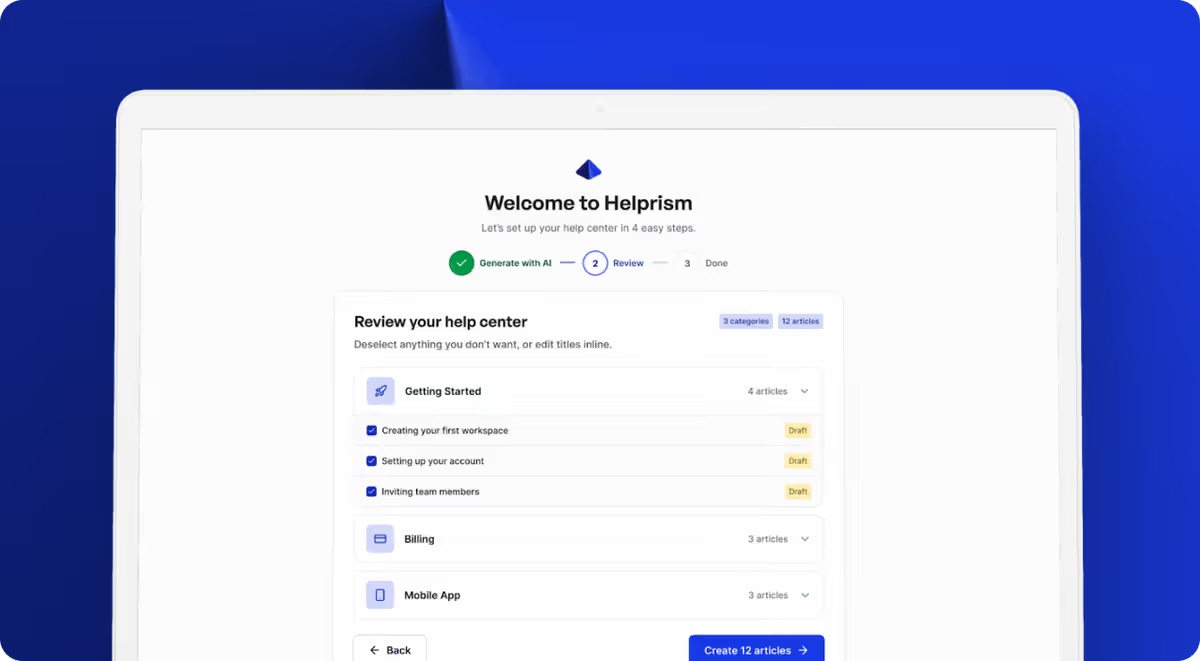
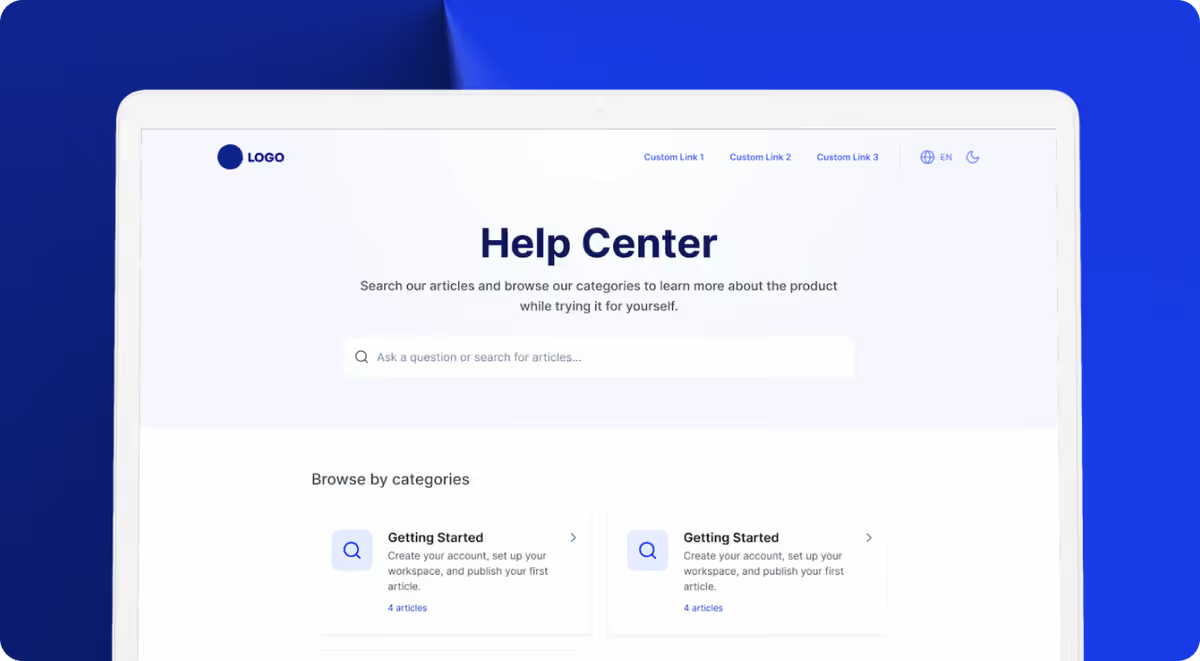
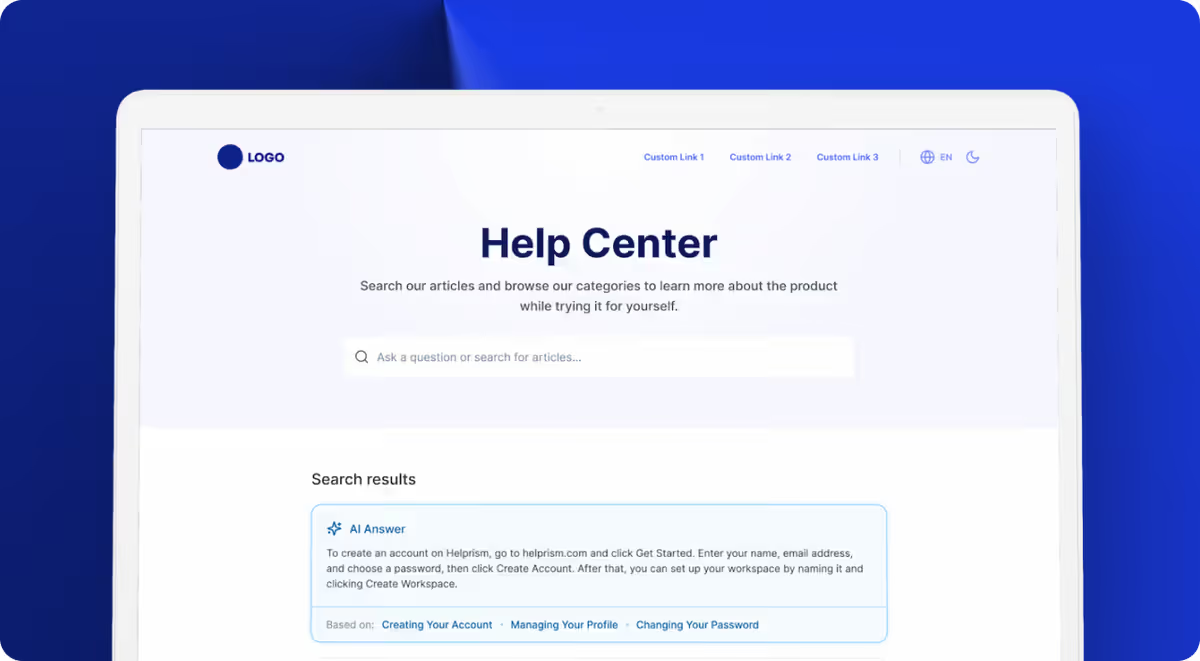
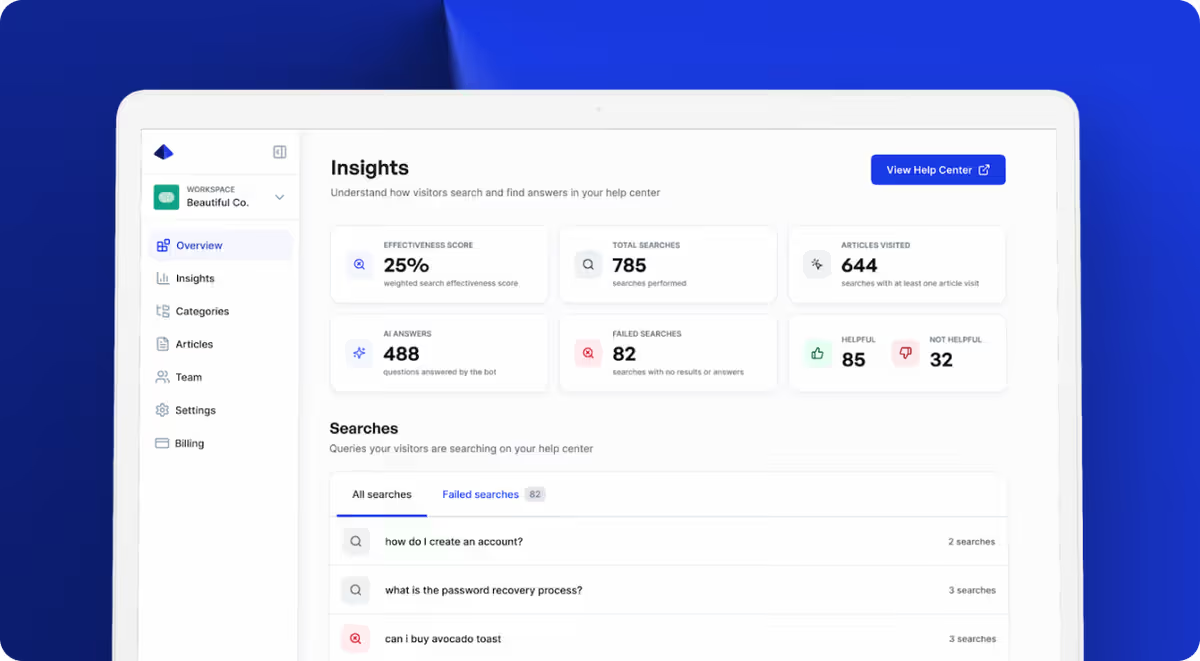
The Notion-style block editor with inline AI tools makes content updates fast — no context-switching to a separate CMS. The analytics dashboard shows failed searches, low-rated articles, and trending topics, so you always know what to write or fix next.
On the Pro plan ($49/mo), the AI answer bot sits on your help center and answers user questions instantly using your published articles — like having a support agent who’s read every article and never sleeps.
Helprism starts free with up to 10 articles and 1 user. Starter ($19/mo) unlocks 50 articles, SEO controls, and analytics. You can validate self-service ROI before scaling up.
Self-Service Is Infrastructure, Not a Feature
Treating self-service as a checkbox feature is a mistake. It’s core infrastructure — like authentication or billing. The sooner you invest in it properly, the more sustainable your support operation becomes as you grow.
Start with your 10 most-asked questions. Turn them into clear, scannable articles. Measure the impact. Then expand from there.
Ready to get started?
Paste your URL. Review the draft. Publish. Your help center is live before your coffee gets cold.
Start Free →