
AI-Powered Knowledge Bases: What Works and What's Hype
A no-nonsense breakdown of which AI features actually reduce support tickets and which are expensive gimmicks — with real benchmarks and examples.

Every help center platform now claims to be “AI-powered.” The term has become so overloaded that it covers everything from a basic search bar with fuzzy matching to a fully autonomous chatbot that invents answers on the fly. One of these is useful. The other will hallucinate your refund policy and tell a customer they’re entitled to a lifetime subscription.
Let’s sort the signal from the noise.
What Actually Works
AI-Generated Draft Content
Starting a help center from zero is the biggest barrier to having one at all. AI that analyzes your website, product pages, and existing docs to generate a first draft of help articles is genuinely useful. It doesn’t replace human editing — but it eliminates the blank-page problem.
The benchmark: a good AI content generator should produce articles that need 15-20 minutes of editing each, not a full rewrite. If you’re spending more time fixing the output than you would writing from scratch, the AI isn’t helping.
AI Answer Bots (Grounded in Your Content)
This is the highest-value AI feature in a knowledge base. A user asks a question in natural language, and the bot returns an answer synthesized from your existing articles — with source citations.
The key word is grounded. The bot should only answer from content you’ve published. No external training data, no improvisation. When a user asks something your articles don’t cover, the correct response is “I don’t have an answer for that” — not a confident-sounding fabrication.
Intercom’s Fin and Zendesk’s AI agents both use this approach. The results are strong: Intercom reports that Fin resolves up to 50% of support conversations without human intervention. That’s real, measurable ROI.
AI Writing Assistance (Inline)
An AI writing assistant embedded in your article editor — for expanding bullet points into paragraphs, adjusting tone, translating to other languages — saves meaningful time. It’s the difference between a 30-minute article and a 10-minute article.
This feature works because the scope is narrow and the human stays in control. You see the output, you edit it, you publish it.
What’s Hype
Fully Autonomous AI Support Agents
The pitch: deploy an AI agent that handles your entire support operation. No humans needed. The reality: these systems work for the simplest 20% of queries and catastrophically fail on the rest. A customer asking about a nuanced billing issue or a bug they’ve encountered needs a human who can investigate, empathize, and make judgment calls.
Companies that go all-in on autonomous AI support typically see CSAT scores drop 15-25% within the first quarter. The cost savings evaporate when you factor in damage control.
”AI-Powered Search” (That’s Just Keyword Matching)
Some platforms slap an “AI-powered” label on basic full-text search. If the search can’t handle synonyms, typos, or natural language queries, it’s not AI — it’s Elasticsearch with a marketing budget.
Real AI search uses semantic understanding to match user intent to article content, not just keywords. The difference is night and day for users.
AI That Generates Content Without Your Input
Any system that generates help articles from a general knowledge model (not your actual product data) is producing content you can’t trust. It might be grammatically perfect and completely wrong. Help center content must be accurate above all else — plausible-sounding misinformation is worse than no information.
How Helprism Approaches AI
Helprism uses AI where it genuinely reduces work and improves outcomes — and avoids it where it introduces risk.
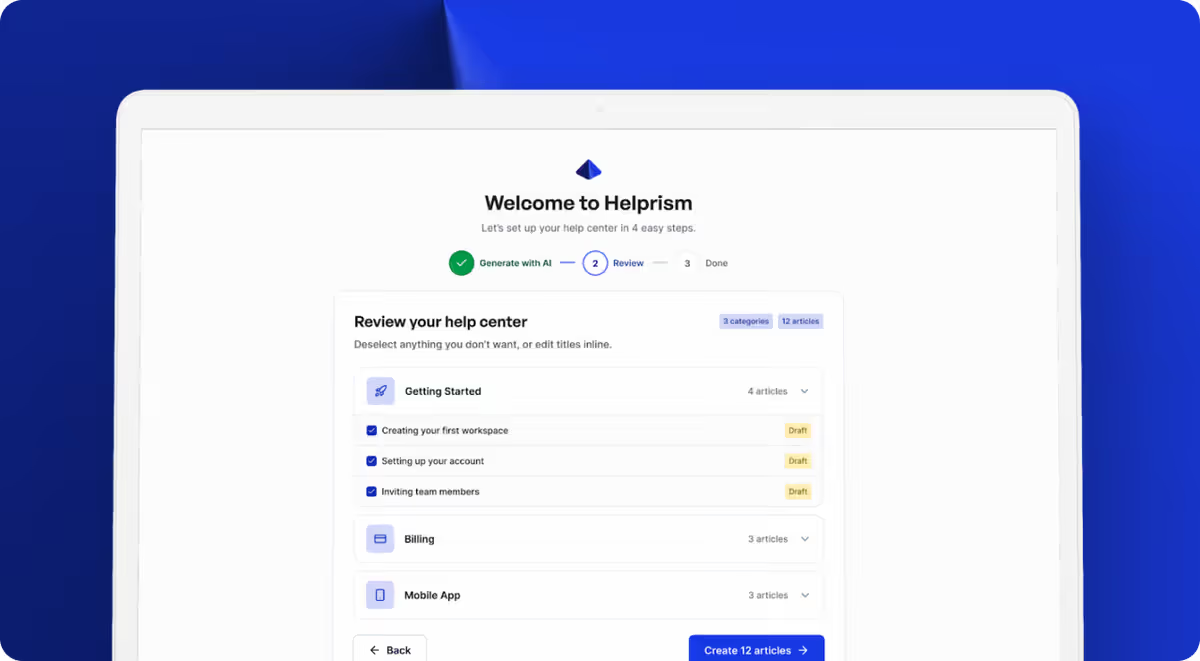
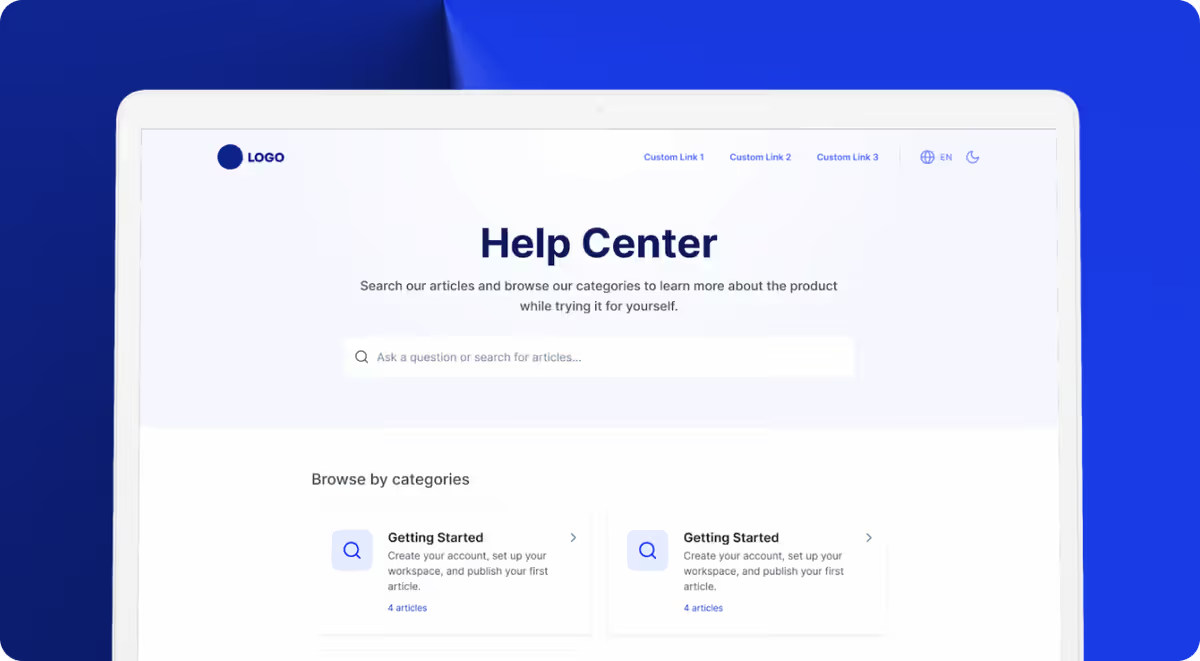
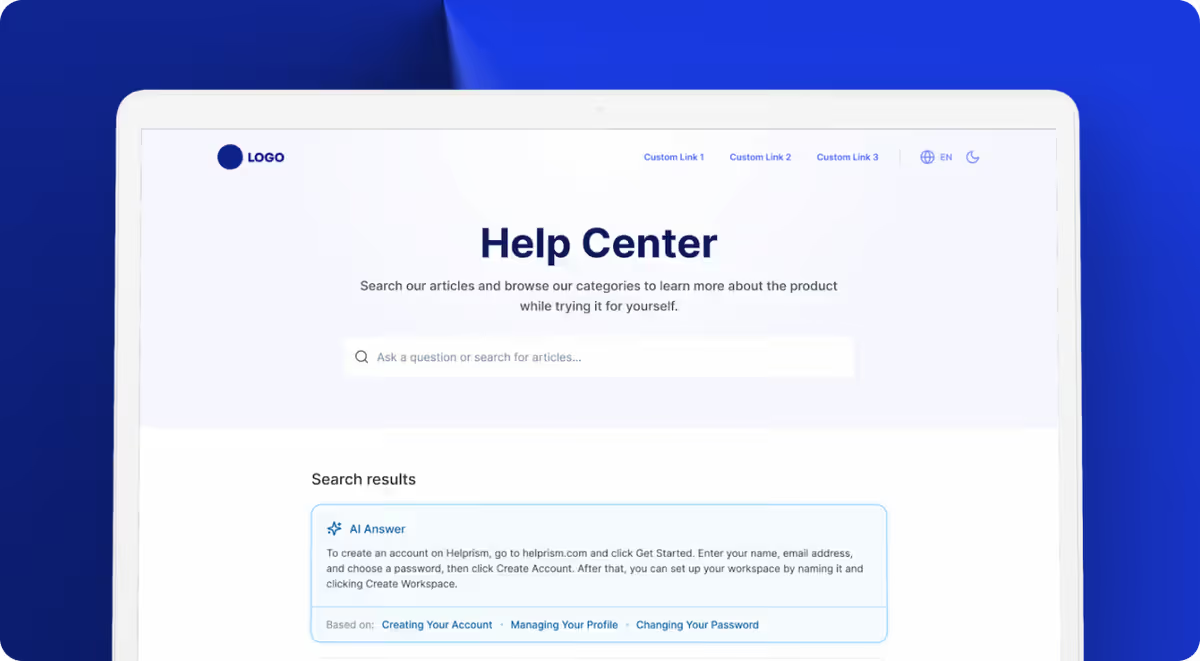
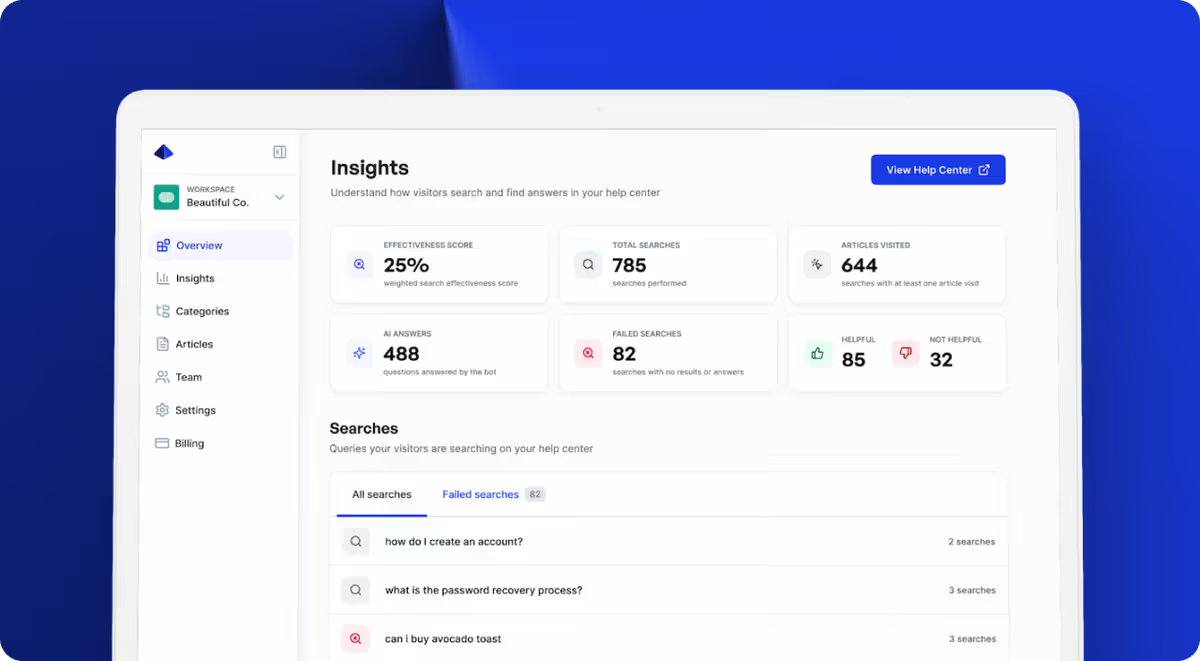
- AI onboarding wizard — paste your URL and get a structured help center draft in minutes, based on your actual site content.
- AI answer bot — grounded in your published articles. It cites sources and stays silent when it doesn’t know.
- Inline AI writing tools — expand, rewrite, and translate content inside the block editor. You stay in control.
- Analytics dashboard — tracks search effectiveness, failed searches, and article feedback so you can see what’s working with data, not guesses.
The free plan includes 1 user and 10 articles. The AI answer bot is available on Pro ($49/mo) and Business ($99/mo) plans.
The Takeaway
AI in knowledge bases is genuinely useful when it’s grounded in your content, keeps humans in the loop, and measures its own effectiveness. It’s hype when it promises full automation, generates unverified content, or puts a marketing label on basic functionality. Choose accordingly.
Ready to get started?
Paste your URL. Review the draft. Publish. Your help center is live before your coffee gets cold.
Start Free →